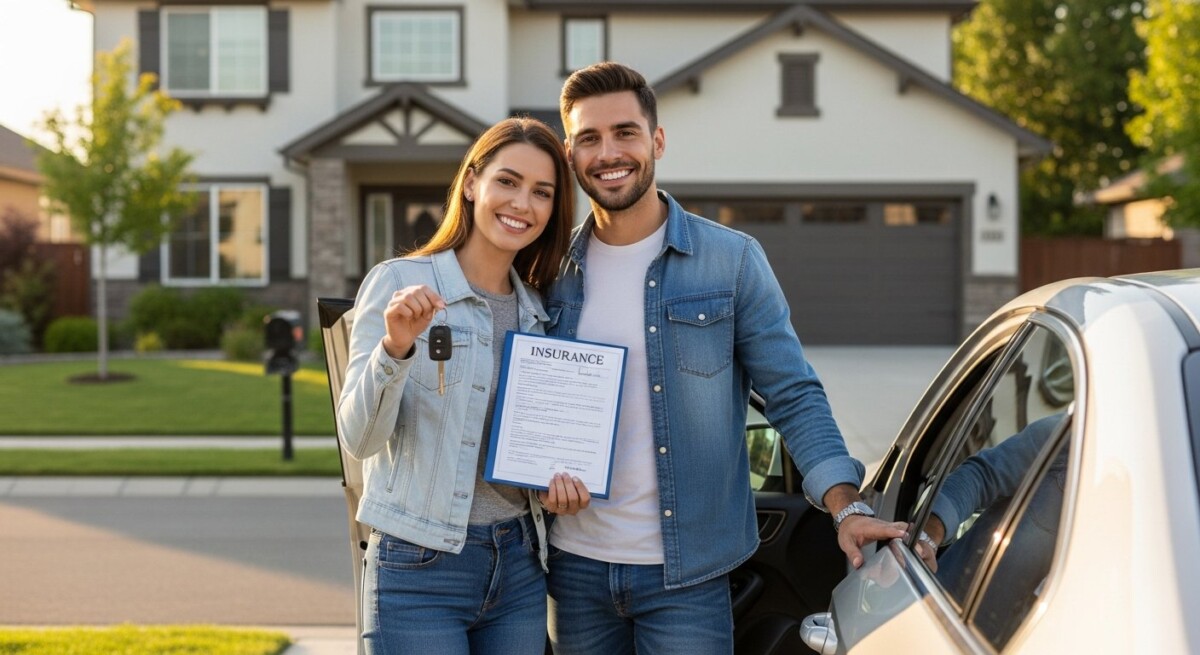
When you rent an apartment or own a house, you already know that protecting your belongings and liability matters. But what about your car? Many people treat auto insurance and property insurance as separate purchases, yet they are deeply connected. Combining them into one policy, often called bundling, can save you hundreds of dollars each year. This guide explains how auto insurance for renters and homeowners works, why bundling is smart, and how to get the best coverage without overpaying.
You might be surprised to learn that your renter or homeowner policy can affect your car insurance rates. Insurers see you as a lower risk when you have both policies with them. That is because loyal customers tend to file fewer claims and stay longer. As a result, they reward you with discounts. In this article, you will discover the exact steps to compare quotes, avoid common mistakes, and maximize your savings.
Why Bundling Auto and Property Insurance Saves Money
Bundling means buying your auto insurance and your renters or homeowners insurance from the same company. The main benefit is a multi-policy discount, which typically ranges from 5% to 25% off both policies. For a driver paying $1,200 per year for auto coverage and a homeowner paying $1,500 for property insurance, a 15% discount could mean $405 in annual savings. That is real money that can go toward other expenses.
Another advantage is convenience. You have one bill, one renewal date, and one customer service line. If you need to file a claim, you only deal with one insurer. This reduces paperwork and confusion. Also, some companies offer a single deductible if you have both auto and home claims from the same event, such as a storm that damages your roof and your car. That feature alone can save you thousands.
However, bundling is not always the cheapest option. Sometimes separate policies from different insurers cost less, especially if you have a clean driving record and a low-risk property. That is why you must compare quotes before committing. Our guide on auto insurance bundling for renters and homeowners explains how to evaluate offers effectively.
Coverage Basics for Renters and Homeowners
Before you bundle, understand what each policy covers. Auto insurance protects you against financial loss from car accidents, theft, and damage. It typically includes liability, collision, comprehensive, medical payments, and uninsured motorist coverage. Renters insurance covers your personal belongings, liability for injuries or damage you cause to others, and additional living expenses if your rental becomes uninhabitable.
Homeowners insurance is similar but also covers the structure of your home, other structures like a garage, and personal property. Both renters and homeowners policies include liability protection, which pays for legal costs if someone sues you for injuries that happen on your property. This liability coverage can also extend to incidents involving your car, but that is where auto insurance becomes essential because your car is a separate risk.
One common misconception is that renters insurance covers your car if it is stolen from your apartment parking lot. It does not. Your auto policy’s comprehensive coverage pays for car theft. Similarly, homeowners insurance does not cover damage to your car from a fire or flood in your garage. You need auto comprehensive coverage for that. Therefore, having both policies is not just about saving money; it is about complete protection.
How to Get the Best Bundled Rate
Getting the best rate requires more than just picking one insurer. Follow these steps to ensure you are not leaving savings on the table:
- Gather your current declarations pages for auto and property insurance. Note your coverage limits, deductibles, and premiums.
- Shop around with at least three insurers that offer both auto and property coverage. Use online comparison tools and independent agents.
- Request a quote for each policy separately and then a bundled quote. Compare the total cost.
- Ask about additional discounts such as safe driver, anti-theft devices, loyalty, and paperless billing.
- Review the coverage limits and deductibles to ensure they match your needs. Do not lower coverage just to save money.
After you receive quotes, compare the total annual cost and the coverage quality. A lower premium with poor customer service or weak claims handling is not worth it. Check each insurer’s financial strength rating from agencies like A.M. Best or Standard & Poor’s. Also, read customer reviews about claims satisfaction.
Once you choose a policy, set a reminder to review it annually. Your life changes, and so do your insurance needs. A new job, a teenage driver, or a home renovation can affect your rates. Re-evaluating your coverage each year helps you stay adequately protected and avoid overpaying.
Common Mistakes to Avoid When Bundling
One big mistake is assuming that bundling always gives you the lowest price. Insurers use different algorithms, and a company that is cheap for auto may be expensive for home. Always run the numbers. Another error is ignoring the deductible structure. If you set a high deductible on your auto policy to lower the premium, but your home policy has a low deductible, your total out-of-pocket cost in a claim could be high. Align your deductibles to a level you can comfortably afford.
Also, do not forget to mention your home security system, smoke detectors, or anti-theft devices. These can earn you additional discounts. Many renters do not realize that having a fire extinguisher or a burglar alarm reduces their renters insurance premium. Similarly, cars with anti-lock brakes and airbags qualify for discounts.
Finally, avoid letting your policy lapse. A gap in coverage, even for one day, can increase your rates significantly. If you switch insurers, make sure the new policy starts on the same day the old one ends. For more detailed strategies, read our auto insurance for renters and homeowners: a bundling guide.
Special Considerations for Renters vs. Homeowners
Renters have different needs than homeowners. If you rent, you do not need to insure the building structure, so your property insurance is cheaper. That means the bundled discount may be smaller in dollar terms, but it still helps. Renters who bundle can also get liability coverage that extends to incidents involving their car, such as if you accidentally damage someone else’s property while driving. Your auto liability covers that, but your renters policy may provide excess liability if the damages exceed your auto limits.
Homeowners, on the other hand, have more to protect. Your home’s replacement cost can be hundreds of thousands of dollars. Bundling with the same insurer for both auto and home often unlocks a higher discount because the potential liability is larger. Additionally, some insurers offer a vanishing deductible feature: for every year you go without a claim, your deductible decreases by a certain amount.
Another consideration is umbrella insurance. If you have significant assets, you may need an umbrella policy that provides extra liability coverage above your auto and home policies. Many insurers offer a discount if you bundle an umbrella with your auto and property policies. This can be a smart way to protect your savings without paying a fortune.
How to Switch Insurers Without Hassle
Switching your auto and property insurance to get a better bundled rate is straightforward if you plan ahead. First, compare quotes and choose your new insurer. Then, contact your current insurer to cancel your policies, but do not cancel until the new policies are active. You can request a cancellation date that matches your new policy’s start date.
Be aware that some insurers charge a cancellation fee, but most do not for auto and home policies. Also, you may have paid your premium in full, and the insurer will refund the unused portion. Ask for the refund in writing. If you have a mortgage, your lender may require you to maintain homeowners insurance, so inform them of the switch and provide proof of the new policy.
When you switch, ensure there is no lapse in coverage. A lapse can lead to higher rates, and some states penalize uninsured drivers with fines. To avoid this, set your new policy to start at 12:01 AM on the day your old policy ends. Most insurers can handle this seamlessly. If you are unsure about the process, our guide on auto insurance for renters and homeowners: bundling guide offers step-by-step advice.
Frequently Asked Questions
Can I bundle auto insurance with renters insurance?
Yes, most major insurers offer renters insurance and allow you to bundle it with your auto policy. The discount is usually between 5% and 15%, and you get the convenience of one company for both.
Does bundling affect my coverage?
No, bundling does not reduce your coverage. It is simply a discount applied to the premium. You still choose the same coverage limits and deductibles as you would with separate policies.
Is it cheaper to bundle or buy separately?
It depends on your situation. In most cases, bundling is cheaper, but you should always compare quotes. Some drivers have a very low auto premium, and the bundling discount may not be enough to offset a higher home insurance quote from the same company.
What is the best way to compare bundled quotes?
Use online comparison tools that let you enter your auto and property details once. Then, request quotes from multiple insurers. Also, speak with an independent insurance agent who can quote from several companies at once.
Final Thoughts on Bundling
Bundling your auto insurance with renters or homeowners coverage is a smart financial move for most people. It can save you money, simplify your insurance management, and provide better protection through shared deductibles and liability options. But do not assume bundling is always the best choice. Compare quotes, review coverage, and consider your personal risk profile.
If you are ready to explore your options, start by getting quotes from multiple insurers. Use the strategies in this article to evaluate them. Also, check our auto insurance for renters and homeowners: bundling guide for more details. And remember, whether you rent or own, having both auto and property insurance is essential for full protection. Take the time to review your policies today, and you will be glad you did tomorrow.