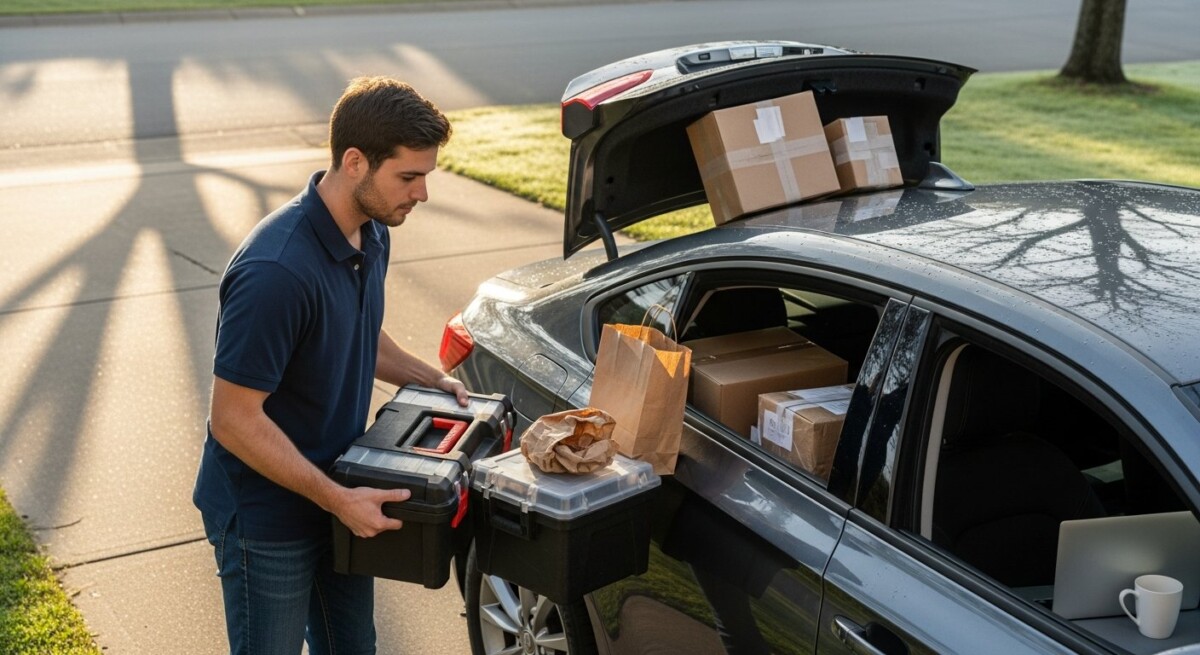
When you use your car for side hustles, freelance work, or small-scale business tasks, your personal auto policy may not provide the protection you expect. Many drivers assume their standard policy covers any driving activity, but insurers often exclude or limit coverage for business-related use. Understanding the nuances of insurance for vehicles used for personal business can save you from costly gaps and legal trouble.
Imagine you drive for a rideshare app on weekends, deliver groceries for a local service, or transport tools to client sites. If you cause an accident during one of these trips, your insurer might deny your claim. This scenario plays out more often than people realize. The key is to match your coverage to your actual driving patterns, not your assumptions.
What Counts as Personal Business Use?
Personal business use covers a wide range of activities that fall between pure personal driving and full commercial operations. Common examples include delivering food or packages, transporting clients occasionally, carrying work equipment, or using your vehicle for rideshare services like Uber or Lyft. Even driving to meet a client for coffee or picking up supplies for a home-based business can trigger coverage questions.
Insurers classify these activities differently. Some allow limited business use with a simple endorsement. Others require a separate commercial policy. The line often depends on frequency, distance, and whether you charge for the service. For instance, delivering flowers once a month for a friend is different from running a daily delivery route for a local bakery.
Why Personal Policies Fall Short
Standard personal auto policies are designed for commuting, errands, and recreational driving. They explicitly exclude “business use” in most contracts. If you fail to disclose business activity, your insurer may decline coverage for a claim or even cancel your policy retroactively. This leaves you personally liable for damages, medical bills, and legal fees.
Consider this scenario: you use your sedan to deliver takeout three evenings a week. One night, you run a red light and hit another car. The other driver is injured, and their vehicle is damaged. Your insurer investigates and discovers you were delivering food for pay. They deny the claim, citing the business use exclusion. Now you face out-of-pocket costs that could reach tens of thousands of dollars.
To avoid such risks, you need a policy that acknowledges and covers your business activities. In our guide on What is the Minimum Auto Insurance in New York?, we explain how state requirements interact with different driving uses.
Common Business Activities That Need Special Coverage
Here are some activities that typically require you to upgrade your auto insurance:
- Rideshare driving (Uber, Lyft, DoorDash, etc.)
- Food or package delivery services
- Transporting clients or customers for a fee
- Carrying heavy equipment, tools, or inventory
- Driving to multiple job sites or client locations
Each activity carries different risk levels. Rideshare driving, for example, has unique gaps because most personal policies exclude coverage when the app is on but no passenger is in the car. Delivery drivers face higher mileage and more urban driving, increasing accident probability. Understanding these distinctions helps you choose the right coverage.
Coverage Options for Personal Business Vehicles
Insurance companies offer several solutions for drivers who use their vehicles for business purposes. The best option depends on your specific use case, frequency, and state requirements. Here are the main choices:
Rideshare Endorsements. Many major insurers now offer rideshare endorsements that fill the gap between personal and commercial coverage. These add-ons typically cover Period 1 (when the app is on but you are waiting for a ride request) and Period 2 (when you are en route to pick up a passenger). For the actual trip with a passenger, the rideshare company’s insurance usually applies.
Business Use Endorsements. For non-rideshare activities like occasional deliveries or client visits, a business use endorsement can extend your personal policy. This is often cheaper than a full commercial policy and covers limited business driving. However, it usually caps the number of miles or trips you can drive for business purposes each year.
Commercial Auto Policies. If you use your vehicle primarily for business (more than 50% of total miles), or if you carry heavy equipment or hazardous materials, a commercial auto policy is usually required. Commercial policies offer higher liability limits and broader coverage for vehicles used in trade. They also cover employees driving your vehicle.
Hired and Non-Owned Auto Coverage. If you use your personal vehicle for business but your employer reimburses you for mileage, your employer’s hired and non-owned auto policy may provide secondary coverage. This is common for real estate agents, sales reps, and field service workers. However, this coverage is often secondary to your personal policy, so gaps can still exist.
When evaluating these options, consider your annual mileage, the value of your vehicle, and the level of risk you are comfortable assuming. If you are unsure what type of coverage fits your situation, our guide on Does my Current Auto Insurance Cover a New Car? provides a framework for assessing policy limits and exclusions.
How to Determine If You Need a Policy Upgrade
Deciding whether to upgrade your auto insurance for business use requires an honest assessment of your driving habits. Start by asking yourself these questions:
- Do I drive for business purposes at least once per week?
- Do I earn income from driving or from services that require driving?
- Do I carry tools, samples, or inventory in my vehicle regularly?
- Do I transport passengers for a fee or donation?
- Does my employer require me to use my vehicle for work?
If you answered yes to any of these questions, you likely need additional coverage. Even if you only drive for business occasionally, the risk of a denied claim may outweigh the modest premium increase for an endorsement. Many insurers charge only $20 to $50 per year for a business use endorsement, which is a small price for peace of mind.
Also consider your state’s minimum insurance requirements. Some states have specific rules for rideshare drivers or delivery workers. For example, California and New York require rideshare companies to provide certain levels of coverage during all phases of a trip. However, state minimums are often too low to protect your assets in a serious accident.
Cost Implications of Adding Business Coverage
Adding business coverage to your auto policy generally increases your premium, but the amount varies. A business use endorsement might raise your rate by 10% to 20%, while a full commercial policy can cost two to three times more than a personal policy. Factors that influence the cost include your driving record, the type of business activity, annual mileage, and the value of your vehicle.
For rideshare drivers, the cost of a rideshare endorsement is usually modest, often $10 to $30 per month. This is because rideshare companies provide primary coverage during active trips, so the endorsement only covers the gaps. Delivery drivers, on the other hand, may see higher premiums because of the increased time on the road and the higher likelihood of accidents in congested areas.
To manage costs, compare quotes from multiple insurers. Some companies specialize in coverage for gig economy workers and may offer better rates than traditional carriers. Also ask about discounts for bundling policies, taking defensive driving courses, or installing telematics devices that track safe driving.
If you are a new driver or someone shopping for your first policy, our guide on Purchasing Auto Insurance in 8 Easy Steps can help you navigate the process and identify the right coverage for your needs.
Real-World Examples of Coverage Gaps
Understanding abstract policy language is easier with concrete examples. Here are three common scenarios where drivers discovered they had insufficient coverage:
Scenario 1: The Rideshare Driver. Maria drives for Uber on weekends. She has a personal policy with a major insurer. One evening, she is waiting for a ride request with the app on. She is rear-ended at a stoplight. Her insurer denies the claim because her policy excludes any activity related to a transportation network company. Uber’s insurance only covers her once she accepts a ride. Maria is stuck with repair costs and medical bills.
Scenario 2: The Freelance Photographer. James is a photographer who drives to client locations with expensive camera equipment. He causes an accident while rushing to a shoot. His insurer pays for the other driver’s damages but refuses to cover the $10,000 worth of camera gear destroyed in the crash. His personal policy excludes business property. A business use endorsement with equipment coverage would have protected him.
Scenario 3: The Home Baker. Linda bakes cakes from home and delivers them to customers. She uses her minivan for deliveries twice a week. She gets into a fender bender while delivering a cake. Her insurer investigates and discovers she is using the vehicle for commercial delivery. They deny the claim, citing the business use exclusion. Linda has to pay for both vehicles’ repairs out of pocket.
These examples illustrate why you cannot rely on a standard personal policy once you start using your vehicle for any income-generating activity. Even if you only do it part-time, the risk is real.
Frequently Asked Questions
Does my personal auto insurance cover occasional business driving?
Most personal policies exclude business driving unless you add a business use endorsement. Occasional driving for business purposes, such as a client meeting once a month, may be covered under some policies, but it is risky to assume. Always check with your insurer before using your vehicle for any business activity.
What is a rideshare endorsement?
A rideshare endorsement is an add-on to a personal auto policy that covers the gap when a rideshare driver is waiting for a ride request or en route to pick up a passenger. Without it, your personal policy will not cover you during those periods, and the rideshare company’s insurance may not apply until the passenger is in the vehicle.
Do I need commercial insurance for a home-based business?
It depends on how often you drive for the business and what you carry. If you make occasional deliveries using your personal vehicle, a business use endorsement may suffice. If you drive daily for deliveries or carry inventory or equipment worth thousands of dollars, a commercial policy is safer.
Can my employer’s insurance cover me when I use my car for work?
Some employers carry hired and non-owned auto insurance that provides secondary coverage when employees use personal vehicles for work. However, this coverage is typically excess over your personal policy. If your personal policy denies the claim due to business use, the employer’s policy may still apply, but the process can be complicated. It is best to have your own coverage that explicitly includes business use.
How much does business auto coverage cost?
Costs vary widely. A business use endorsement may add $20 to $100 per year. A rideshare endorsement typically costs $10 to $30 per month. A commercial auto policy can cost $1,000 to $3,000 per year or more, depending on your vehicle, driving history, and business type. Shopping around and comparing quotes is the best way to find affordable coverage.
If you are a new driver or have limited driving history, our article on Tips For Getting Auto Insurance For New Driver offers practical advice for securing coverage that fits your situation.
Steps to Get the Right Coverage
Taking action to protect yourself is straightforward. Follow these steps:
- Review your current auto policy declarations page. Look for exclusions related to business use.
- Contact your insurer and describe your driving activities honestly. Ask if they offer a business use endorsement or rideshare add-on.
- Get quotes from at least three insurers that specialize in coverage for your type of business activity.
- Compare coverage limits, deductibles, and premiums. Pay attention to what is excluded.
- Choose the policy that best balances cost and protection. Make sure the policy explicitly covers your business use in writing.
- Notify your insurer if your business activities change. Adding a new delivery service or increasing mileage may require a policy update.
Taking these steps now can prevent a financial disaster later. The small investment in proper coverage is far less than the cost of a single denied claim.
Insurance for vehicles used for personal business is not a luxury. It is a necessity for anyone who uses their car to earn income or support a side venture. By understanding your risks and exploring your options, you can drive with confidence knowing you are protected whether you are on a personal errand or a business delivery.