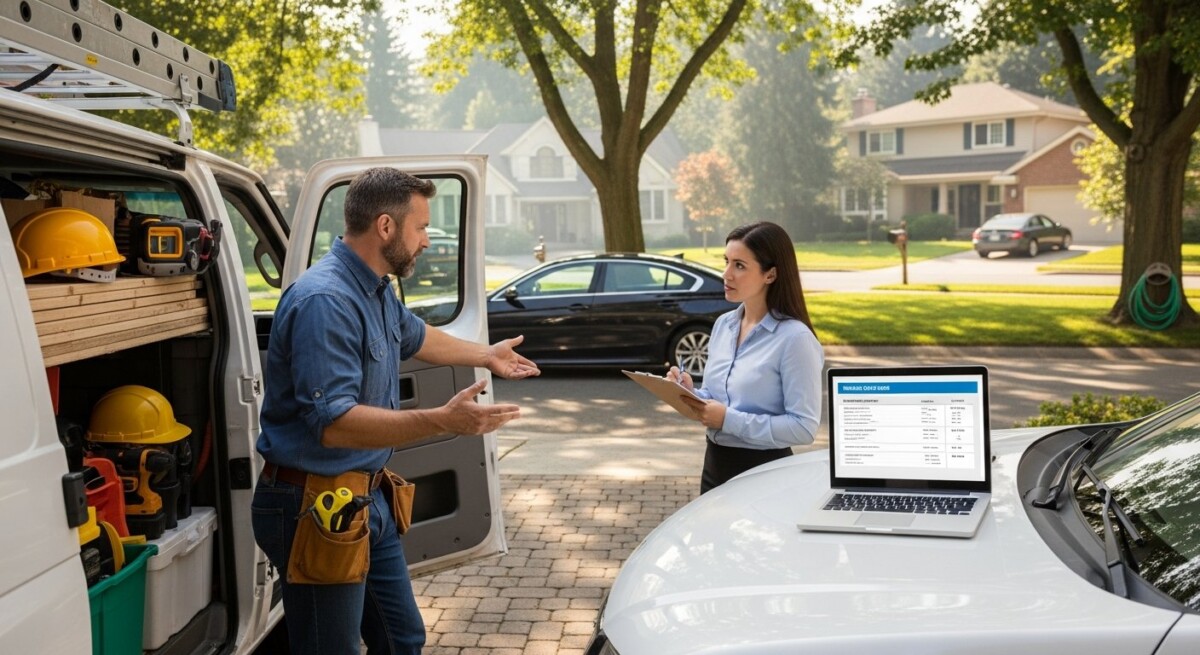
If you are self-employed and use your vehicle for work, standard personal auto insurance may leave you exposed. Many freelancers, contractors, and small business owners assume their personal policy covers business-related driving, but that is often not the case. A single accident during a client visit or a delivery run could result in a denied claim, leaving you to pay out of pocket. Understanding how to secure the right auto insurance for self-employed drivers is essential to protect your income, your vehicle, and your livelihood. This guide walks you through the coverage gaps, policy options, and strategies to get the protection you need without overpaying.
Why Personal Auto Insurance Falls Short for Self-Employed Drivers
Personal auto insurance policies are designed for commuting, errands, and recreational driving. When you use your car for business purposes, such as meeting clients, transporting equipment, or making deliveries, insurers classify that as a higher risk. Most personal policies explicitly exclude business use or limit it to incidental activities. If you file a claim while on a work-related trip, the insurer may deny coverage entirely. This is a critical risk for self-employed drivers who rely on their vehicles to generate income. In our guide on auto insurance for gig economy workers, we explain how coverage gaps vary by occupation and how to close them.
Beyond claim denials, there is the issue of liability. If you cause an accident while working, the injured party could sue you personally. A personal policy may not provide enough liability coverage for business-related incidents, and your assets could be at risk. Self-employed drivers often need higher liability limits or a commercial policy to match the exposure. Additionally, if you use your vehicle to carry tools, samples, or inventory, personal policies rarely cover damage to those items. You would need separate inland marine or business property coverage. Recognizing these gaps is the first step toward choosing the right policy.
When You Need Commercial Auto Insurance
Not every self-employed driver needs a full commercial policy, but many do. The key factor is how you use your vehicle. If you drive to a single work location each day, such as a co-working space or a client’s office, a personal policy with a business-use endorsement may suffice. However, if you travel to multiple job sites, transport goods or equipment, or use your car as a mobile office, commercial auto insurance is often required. Commercial policies cover higher mileage, more frequent trips, and the added risk of carrying business-related cargo.
Consider a freelance photographer who drives to various locations with expensive camera gear. A personal policy would not cover the gear if it is stolen from the car, and a claim for an accident during a shoot could be denied. A commercial policy would protect both the vehicle and the equipment. Similarly, a caterer delivering food to events needs liability coverage for the delivery itself. Commercial policies also offer higher liability limits, which are crucial if a lawsuit arises from a business-related accident. For self-employed drivers in high-risk industries, the cost of a commercial policy is a worthwhile investment compared to the potential financial devastation of an uncovered loss.
Comparing Personal with Business Use Endorsement vs. Commercial Policy
Some insurers offer a business use endorsement that you can add to your personal policy. This endorsement typically covers occasional business driving, such as visiting clients or running work errands. It is cheaper than a full commercial policy but has limitations. For example, it may not cover delivery driving, transporting hazardous materials, or using the vehicle for a registered business. If you exceed the mileage or trip limits, the endorsement may not apply. A commercial policy, on the other hand, is designed for regular business use and includes broader coverage for cargo, tools, and higher liability. It also covers employees or subcontractors who may drive your vehicle.
To decide which option fits, assess your driving habits. Ask yourself: How many miles do I drive for work each week? Do I carry equipment or goods? Could I be sued for a work-related accident? If the answer to any of these questions suggests significant exposure, lean toward a commercial policy. For those with minimal business driving, a business use endorsement may be a cost-effective middle ground. Always disclose your exact use case to the insurer to avoid misrepresentation, which can void coverage.
Coverage Options for Self-Employed Drivers
Whether you choose a personal policy with an endorsement or a commercial policy, you need to tailor the coverage to your specific risks. Here are the key coverage types to consider:
- Liability Coverage: This pays for injuries or property damage you cause to others. Self-employed drivers should consider higher limits, such as 100/300/100 (100k per person, 300k per accident, 100k property damage), to protect business assets.
- Uninsured/Underinsured Motorist Coverage: protects you if you are hit by a driver with insufficient insurance. This is vital for self-employed drivers who cannot afford time off work due to an accident.
- Medical Payments or Personal Injury Protection: Covers your medical bills regardless of fault. For self-employed individuals, this can prevent lost income from delaying recovery.
- Comprehensive and Collision: Covers damage to your vehicle from accidents, theft, vandalism, or natural disasters. If your vehicle is essential for work, these coverages are critical.
- Hired and Non-Owned Auto Liability: If you rent vehicles or use personal cars for business, this coverage fills gaps. It is especially relevant for self-employed drivers who occasionally use rental vans or borrowed cars.
- Cargo or Equipment Coverage: Protects tools, inventory, or samples in your vehicle. Standard auto policies exclude these items, so add a rider or inland marine policy.
Each of these coverages addresses a specific risk that self-employed drivers face. For instance, a freelance tradesperson hauling expensive tools would prioritize cargo coverage. A consultant who drives to client meetings might focus on higher liability limits. Review your business operations and discuss them with an agent to build a policy that leaves no gaps. For residents in specific states, local factors like weather or traffic density may influence your choices. For example, drivers in Baltimore can explore auto insurance plans in Baltimore, Maryland that account for urban driving risks.
How to Save on Auto Insurance for Self-Employed Drivers
Insurance costs can be a significant expense for self-employed individuals, but there are legitimate ways to reduce premiums without sacrificing coverage. First, bundle your auto policy with other insurance types, such as homeowners or renters insurance, for a multi-policy discount. Many insurers also offer discounts for safety features, anti-theft devices, and good driving records. If you drive fewer miles for personal use, a low-mileage discount may apply. Additionally, paying annually instead of monthly can save on administrative fees.
Another strategy is to increase your deductibles. A higher deductible lowers your premium, but make sure you have enough savings to cover the deductible if you need to file a claim. For self-employed drivers, consider a deductible of 500 to 1,000 dollars. You can also ask about professional affiliations. Some insurers offer group discounts for members of trade associations, freelance unions, or small business networks. Do not assume you have to pay full price. Shopping around and comparing quotes from multiple insurers is the most effective way to find competitive rates. For self-employed drivers in the Southeast, checking local options like auto insurance plans in Atlanta, Georgia can reveal region-specific discounts.
Finally, maintain a clean driving record. Traffic violations and at-fault accidents increase premiums for years. Defensive driving courses can sometimes reduce rates and improve your skills. If you use your vehicle for both business and personal use, keep a mileage log to document business miles. Some insurers offer usage-based insurance programs that track your driving habits. If you are a safe driver, you could earn a discount. However, weigh the privacy implications before enrolling.
What to Do If You Have a Claim
Filing a claim as a self-employed driver requires careful documentation. Since your vehicle is tied to your income, you need to minimize downtime. After an accident, ensure everyone is safe and call the police if there are injuries or significant damage. Exchange insurance information with the other driver, but do not admit fault. Take photos of the scene, damage, and any relevant road conditions. Notify your insurer as soon as possible, and be honest about whether you were on a business trip. Misrepresenting the use of your vehicle can lead to claim denial.
If your vehicle is drivable, consider using a rental car through your policy if you have rental reimbursement coverage. For self-employed drivers, this coverage is often worth the small additional cost. It keeps you earning while your car is repaired. If the claim is complex, such as a dispute over liability or coverage, consult with an attorney or public adjuster. Your insurer should provide a claims adjuster, but you have the right to advocate for yourself. For those in northern regions, understanding local insurance nuances is helpful. Check resources like auto insurance plans in Anchorage, Alaska for insights on cold-weather claims.
Frequently Asked Questions
Can I use my personal auto insurance for Uber or DoorDash driving?
Most personal policies exclude ride-hailing and food delivery. You need a commercial policy or a rideshare endorsement. Some insurers offer specific coverage for gig economy drivers, but it varies by company. Always check with your insurer before starting.
How much liability coverage do I need as a self-employed driver?
At minimum, carry the state-required limits, but consider 100/300/100 or higher. If you have significant assets, an umbrella policy can add extra protection. Discuss your net worth and business risks with an agent.
Does commercial auto insurance cover my tools and equipment?
Standard commercial policies cover the vehicle but not cargo or tools. You need separate inland marine or equipment coverage. Ask your insurer about adding a rider for business property.
What is a business use endorsement, and is it enough?
A business use endorsement modifies your personal policy to allow occasional business driving. It is cheaper than commercial insurance but has restrictions on mileage, vehicle use, and cargo. Review the endorsement terms carefully.
Will my insurance premium go up if I switch to a commercial policy?
Commercial policies often cost more than personal policies because they cover higher risk. However, you can offset the increase by bundling, raising deductibles, and shopping around. Some self-employed drivers find the cost manageable when compared to the risk of a denied claim.
Securing the right coverage is an investment in your business stability. For personalized assistance, call us at 833-214-7506.