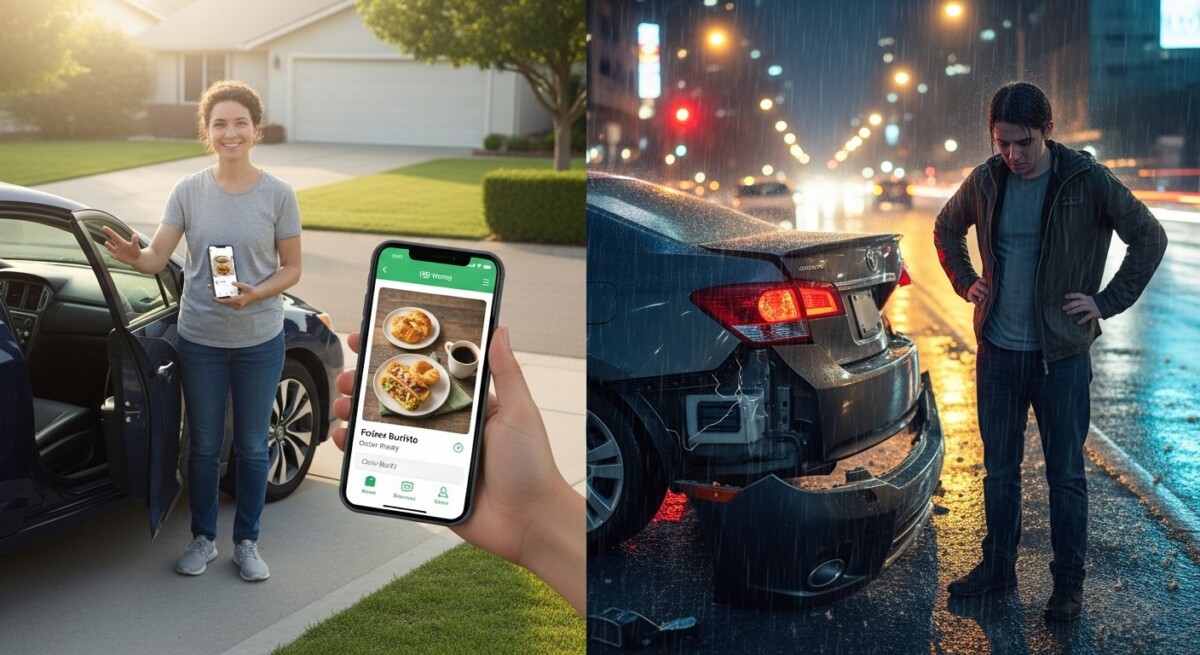
Rideshare driving, food delivery, and freelance courier work have reshaped how millions earn a living. Yet many gig economy drivers assume their personal auto policy covers them during paid trips. That assumption can lead to devastating claim denials and out-of-pocket expenses after an accident. Understanding the unique gap between personal and commercial coverage is essential for anyone who uses their vehicle for work. This article explains why standard policies often fall short and how to secure proper protection without overpaying.
Why Personal Auto Insurance Falls Short for Gig Work
Standard personal auto insurance is designed for commuting, errands, and recreational driving. When you log into a rideshare app or accept a delivery order, your vehicle shifts into a commercial use category. Insurers classify this as a higher-risk activity because you spend more time on the road, drive in unfamiliar areas, and carry paying passengers or goods. Most personal policies exclude coverage for any accident that occurs while you are engaged in a business activity. If you cause a collision during a delivery, your insurer may deny the claim and cancel your policy.
Gig economy workers often discover this gap only after filing a claim. The result can be thousands of dollars in repair bills, medical costs, or liability judgments. Some drivers mistakenly believe that the platform’s insurance (such as Uber or DoorDash) will cover everything. In reality, these commercial policies only apply during specific periods, such as when you have a passenger or an active delivery. When you are waiting for a request or driving between trips, you fall into a coverage void. This is where specialized auto insurance for gig economy workers becomes critical.
How Rideshare and Delivery Insurance Works
Insurance for gig workers typically comes in two forms: rideshare endorsements and hybrid usage-based policies. A rideshare endorsement is an add-on to your existing personal policy. It fills the gap during what is called Period 1 (waiting for a ride request) and Period 2 (en route to pick up a passenger). During Period 3 (when a passenger is in the vehicle), the rideshare company’s commercial policy provides primary coverage. This layered approach ensures you are never uninsured while working.
Delivery drivers for services like DoorDash, Uber Eats, or Instacart face a similar gap. However, many insurers now offer delivery-specific endorsements that cover property damage and liability while transporting goods. Unlike rideshare coverage, delivery insurance does not need to coordinate with a passenger liability policy. Instead, it extends your personal coverage to include business use of your vehicle for deliveries. Some carriers also offer combined policies that cover both rideshare and delivery activities under one endorsement.
Key Coverage Gaps to Watch For
Even with an endorsement, there are limitations to understand. Most rideshare and delivery policies do not cover commercial use beyond the specific app-based activities listed in your policy. If you also use your car for pizza delivery for a local restaurant or transport equipment for a side job, you may need a commercial auto policy instead. Additionally, physical damage coverage for your own vehicle may have a higher deductible or be excluded entirely during working periods. Review your policy declarations page carefully and ask your agent about contingent liability and comprehensive coverage while logged into an app.
Another common gap involves non-owned vehicles. If you rent a car for gig work or use a friend’s vehicle, your personal policy may not extend to commercial activities in that car. Some platforms provide contingent coverage for rental cars, but the terms vary widely. For drivers in cities like Atlanta or Anchorage, where gig work is prevalent, local regulations may also affect coverage requirements. In our guide on auto insurance plans in Atlanta, Georgia, we explain how state laws interact with rideshare endorsements.
Comparing Costs: Endorsements vs. Separate Commercial Policies
Adding a rideshare or delivery endorsement to your personal policy typically costs between $10 and $30 per month. This is often the most affordable route for part-time gig workers. However, if you drive more than 20 to 30 hours per week for work or earn a significant portion of your income through gig platforms, a standalone commercial auto policy may be more appropriate. Commercial policies offer higher liability limits, broader property damage coverage, and protection for specialized equipment like food warmers or delivery bags.
Commercial policies cost more, often $100 to $300 per month, but they eliminate coverage gaps entirely. They also provide coverage for multiple drivers and vehicles, which is useful if you operate a small delivery fleet. For drivers in Baltimore or Des Moines, where insurance rates vary by state, comparing quotes for both options can reveal substantial savings. Our article on auto insurance plans in Baltimore, Maryland breaks down how local factors influence premium calculations.
Steps to Get the Right Auto Insurance for Gig Economy Workers
Securing proper coverage requires a deliberate approach. Follow these steps to avoid expensive mistakes:
- Audit your current policy. Review your declarations page for any exclusion related to business use or ridesharing. Look for language like “livery” or “commercial activity.” If you see these terms, you need an endorsement.
- Contact your insurer directly. Ask if they offer a rideshare or delivery endorsement. Many major carriers like State Farm, Geico, and Progressive now offer these add-ons. If your insurer does not, consider switching to one that does.
- Compare quotes for commercial coverage. If you drive full-time, request quotes from commercial auto specialists. Include your expected annual mileage and typical driving hours.
- Verify platform coverage details. Read the insurance section of each gig app you use. Note when their coverage starts and ends, and what deductibles apply.
- Reassess annually. Your driving habits may change. If you increase your hours or add a new platform, update your policy accordingly.
Taking these steps ensures you are not caught off guard by a denied claim. Many drivers assume their personal policy covers everything until they file a claim and discover the exclusion. A proactive review can save thousands of dollars and prevent lapses in coverage.
Common Misconceptions About Gig Economy Auto Insurance
One widespread myth is that rideshare companies provide full coverage at all times. In reality, Uber and Lyft only provide liability coverage during Period 2 and Period 3, and it often comes with a high deductible (typically $1,000 to $2,500 for physical damage). If you are in an accident during Period 1, you may have no coverage at all from the platform. Another misconception is that delivery insurance covers personal use when you are not working. Most endorsements seamlessly switch between personal and business use, meaning your coverage remains active 24/7 without needing to notify the insurer each time you start driving for work.
Some drivers also believe that adding a rideshare endorsement will dramatically increase their premiums. While rates do go up, the increase is modest compared to the financial risk of driving uninsured. A single uncovered accident can result in lawsuits, wage garnishment, or loss of personal assets. For most gig workers, the additional $10 to $30 per month is a small price for peace of mind. For those in states like Alaska, where winter driving conditions increase accident risk, proper coverage is even more critical. Our guide on auto insurance plans in Anchorage, Alaska highlights region-specific considerations for gig drivers.
Frequently Asked Questions
Can I use my personal auto insurance for Uber or DoorDash?
No. Most personal auto policies explicitly exclude coverage for any business use, including rideshare and delivery driving. Using your vehicle for gig work without an endorsement or commercial policy voids coverage in the event of a claim.
How much does rideshare insurance cost per month?
Rideshare endorsements typically add $10 to $30 per month to your existing premium. Commercial policies for full-time drivers range from $100 to $300 per month depending on location, driving record, and coverage limits.
Does my insurance cover me when I am waiting for a ride request?
Without a rideshare endorsement, your personal policy does not cover you during Period 1 (waiting for a request). The platform’s coverage also does not apply during this period. An endorsement fills this gap.
What happens if I get into an accident while delivering food?
If you have a delivery endorsement, your personal policy covers liability and physical damage according to your policy terms. Without it, the accident is uninsured for business use, and your insurer may deny the claim and cancel your policy.
Do I need commercial auto insurance for part-time gig work?
Part-time drivers who work fewer than 20 hours per week can usually rely on a rideshare or delivery endorsement. Full-time drivers or those who use their vehicle for non-app-based commercial activities should consider a commercial policy.
Protect Your Income and Your Vehicle
Gig economy driving offers flexibility and income, but it also introduces insurance risks that personal policies do not cover. By choosing the right auto insurance for gig economy workers, you protect your vehicle, your earnings, and your financial future. Whether you add an endorsement or switch to a commercial policy, the investment is small compared to the cost of a single uncovered accident. For more information tailored to your area, explore our resources on auto insurance plans in Des Moines, Iowa and other local markets. Drive with confidence knowing you have the coverage you need.