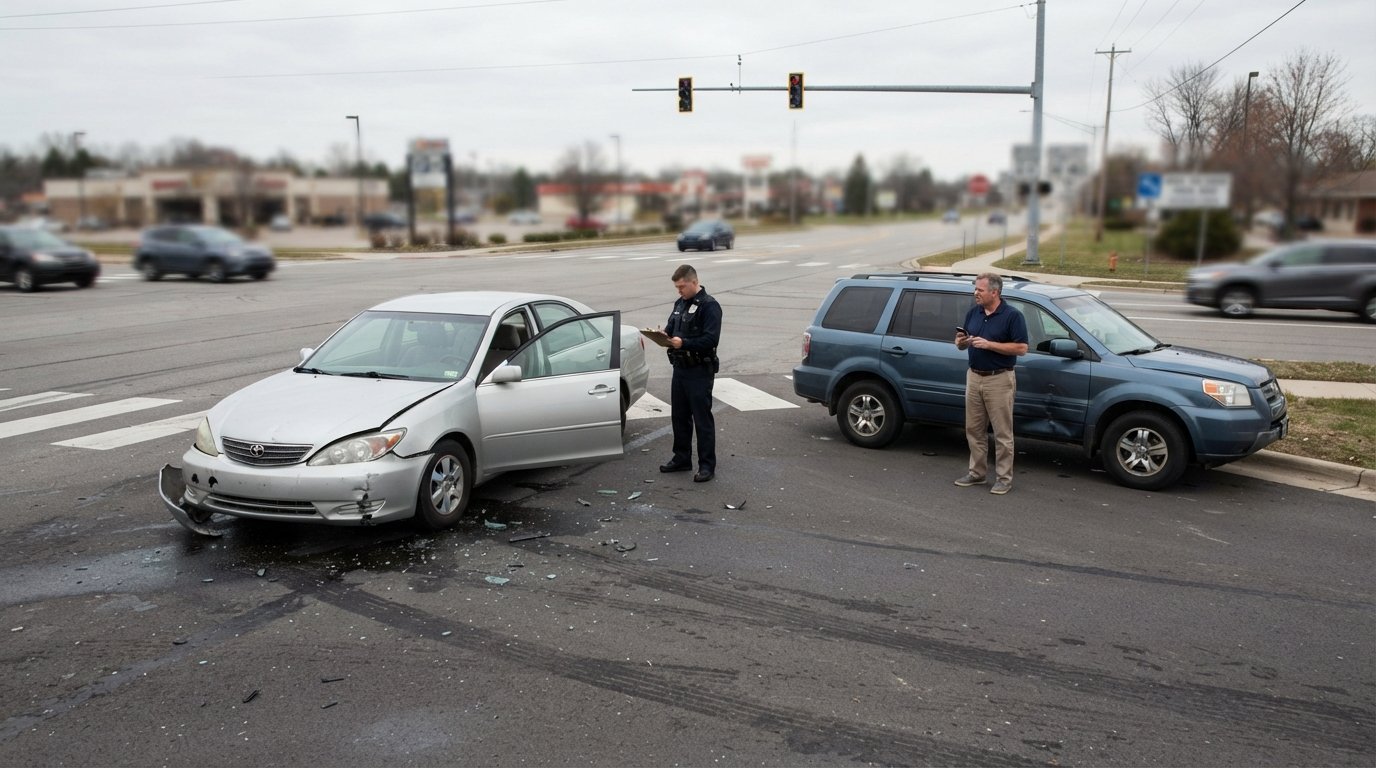
Imagine a split-second mistake: a misjudged turn, a moment of distraction, and your vehicle collides with another. The immediate shock is often followed by a wave of anxiety about the financial consequences. Whose property is damaged? Who is responsible for the other driver’s medical bills? This is the precise moment the fundamental protection of auto liability insurance transitions from a legal requirement on paper to a critical financial lifeline in reality. It’s the bedrock of most car insurance policies, designed not to repair your own car, but to shield your assets from the potentially devastating costs of injuring others or damaging their property when you are at fault in an accident.
The Core Purpose of Auto Liability Coverage
Auto liability insurance serves a singular, vital purpose: financial protection for others. When you cause an accident, you become legally and financially responsible for the resulting damages. Without liability coverage, you would be personally on the hook for all costs, which can escalate into hundreds of thousands of dollars or more from vehicle repairs, medical treatments, lost wages, and even legal defense. This coverage acts as a buffer between your personal wealth, including your savings, home, and future income, and the claims made by affected parties. It is a promise to pay, on your behalf, for the harm you’ve caused, up to the limits you selected on your policy. This concept is why states mandate minimum liability limits; it ensures that all drivers have at least a basic level of financial responsibility to protect the public on the roads.
Breaking Down the Liability Coverage Components
Auto liability insurance is typically presented as three numbers on your policy declarations page, such as 25/50/25 or 100/300/100. Understanding this split coverage is essential to knowing exactly what you’re purchasing. The coverage is divided into two main categories, often expressed as three limits.
Bodily Injury Liability (BI)
This is the first and usually the most critical component. Bodily injury liability covers costs associated with injuries to other people caused by you or someone driving your car with permission in an at-fault accident. The coverage is expressed with two numbers, for example, $25,000/$50,000. The first number is the maximum your insurer will pay per person injured in the accident. The second number is the maximum it will pay for all injuries in that single accident. If you have a 25/50 limit and injure two people, with one claiming $40,000 and the other $15,000, your insurance would cover $25,000 for the first person (hitting the per-person cap) and the full $15,000 for the second, totaling $40,000, which is under the $50,000 per-accident cap.
Property Damage Liability (PD)
This is the third number in the sequence. Property damage liability covers damage you cause to someone else’s property. This most commonly means the other driver’s car, but it can also include fences, mailboxes, buildings, lampposts, or any other structure you might hit. Using our 25/50/25 example, the final “25” signifies $25,000 of coverage for property damage per accident. Given the high cost of many modern vehicles, especially electric and luxury models, a low property damage limit can be exhausted quickly, leaving you personally liable for the remainder.
How State Minimums Compare to Real-World Needs
Every state sets its own minimum required liability limits, but these minimums are often dangerously low and have not kept pace with the rising costs of healthcare and vehicle repair. For instance, some states require limits as low as 15/30/5. In a serious accident, $15,000 for one person’s medical bills could be consumed by a single ambulance ride and emergency room visit. If you are found liable for costs exceeding your policy limits, the injured party can seek a court judgment against you for the difference, a process that can lead to wage garnishment, liens on your property, and financial ruin.
Assessing your real-world need involves a careful evaluation of your personal financial picture. A common and prudent recommendation from financial advisors is to carry liability limits that at least match your total net worth. This includes the value of your home, investments, savings, and future income. Higher limits provide a deeper safety net and, importantly, often grant you access to your insurer’s legal defense team. Carrying only the state minimum is a significant financial risk for most drivers. Consider the following key factors when choosing limits:
- Your Assets: What do you own that could be seized in a lawsuit? This is your primary motivator for higher limits.
- Your Income: Future earnings can be garnished to satisfy a judgment.
- Driving Habits and Location: Long commutes in heavy traffic or dense urban areas statistically increase your risk exposure.
- Cost-Benefit Analysis: Increasing your limits from state minimums to robust coverage (e.g., 100/300/100) often costs significantly less than you might expect, providing immense value for the extra protection.
The Critical Process of a Liability Claim
Understanding what happens after an accident where you are at fault demystifies the insurance process. Once the accident is reported to your insurer, they will assign a claims adjuster. This professional’s role is to investigate the accident, determine fault based on evidence and applicable laws, and manage the financial settlement. The adjuster will communicate with the other party (or their insurer), evaluate their injury and damage claims, negotiate settlements, and issue payment up to your policy limits. Your cooperation is essential. You must provide a statement and any evidence you have, such as photos or witness contacts. Importantly, your liability insurance provides you with a legal defense. If you are sued over the accident, your insurer will appoint and pay for an attorney to represent you in court, but only up to the limit of your liability coverage.
What Auto Liability Insurance Does Not Cover
A clear understanding of the gaps in liability coverage is just as important as knowing what it does. Auto liability insurance is exclusively for damage and injuries you cause to others. It provides no protection for you or your vehicle. For that, you need to purchase additional, separate coverages. Key exclusions include:
- Your Own Vehicle Repairs: To cover damage to your car from a collision, you need Collision coverage.
- Your Own Medical Bills: To cover your and your passengers’ injuries, you need Personal Injury Protection (PIP) or Medical Payments (MedPay) coverage, and/or health insurance.
- Damage from Non-Collision Events: Theft, vandalism, hail, or hitting an animal are covered by Comprehensive coverage.
- Underinsured/Uninsured Motorists: If another driver with little or no insurance injures you, your own Underinsured Motorist (UIM) coverage is needed to fill the gap.
Relying solely on liability insurance leaves you personally vulnerable to these common risks. A full auto insurance policy strategically layers these coverages on top of your liability foundation.
Frequently Asked Questions
Is auto liability insurance required everywhere?
Yes, with the rare exception of New Hampshire and Virginia (which have alternative financial responsibility laws), all states require drivers to carry a minimum amount of auto liability insurance. Driving without it can result in severe penalties like fines, license suspension, and vehicle impoundment.
Does liability insurance cover me if I drive a rental car?
Typically, your personal auto liability insurance extends to rental cars for the same coverage limits you carry. However, it’s crucial to verify this with your insurer. Rental companies also offer their own liability insurance, often called a Supplemental Liability Insurance (SLI) waiver, which can provide additional peace of mind.
What if someone else drives my car and gets in an accident?
In most cases, auto liability insurance follows the car, not the driver. If you give someone permission to drive your vehicle and they cause an accident, your liability insurance is generally primary, meaning it pays first. Their own insurance might act as secondary coverage if your limits are exhausted.
How does liability insurance work if I’m only partially at fault?
Many states use comparative or contributory negligence rules. If you are found 60% at fault, your liability insurance would typically be responsible for 60% of the other party’s covered damages, up to your policy limits. The specific rules vary significantly by state.
Auto liability insurance is not merely a line item on a bill or a legal checkbox to tick. It is a foundational component of responsible vehicle ownership and personal financial planning. By moving beyond the bare minimum state requirements and selecting limits that genuinely reflect your assets and risk, you transform this mandatory purchase into a powerful shield. It grants you the confidence to drive knowing that a single mistake, while unfortunate, will not lead to financial catastrophe for you or for those you may inadvertently harm on the road.
Better coverage doesn’t have to cost more—compare now at NewAutoInsurance.com or call 📞 (833) 214-7506.